Why sustainable building matters in central Iowa
Buildings account for 39% of U.S. energy consumption. In Iowa, where we deal with humid summers and cold winters, a poorly insulated house can cost you hundreds of extra dollars every year in heating and cooling bills.
Sustainable building isn't just about helping the environment. It's about building homes that are more comfortable, more durable, and cheaper to operate over their lifetime.
At Timberbrook, we focus on three core practices: reuse, reduce, and recycle.
Reuse: making materials work harder
Construction waste is a massive problem. As much as 30% of materials delivered to a job site can end up in the dumpster. We track every piece of material that comes onto our sites and find ways to reuse what we can.
Concrete formboards, for example, get used on multiple projects. Offcuts from framing get cataloged and used for blocking, bracing, or small repairs on other jobs. We don't throw away materials just because they're not needed for the current project.
This approach saves money and keeps waste out of landfills. In 2018 alone, construction and demolition projects sent almost 145 million tons of waste to U.S. landfills. We're not solving that problem on our own, but every project where we reuse instead of tossing materials is a step in the right direction.
Reduce: using less without sacrificing quality
Most builders frame walls on 16-inch centers because that's how it's always been done. But in many cases, 24-inch spacing works just as well and uses significantly less lumber. The key is planning carefully and coordinating with your insulation strategy.
We also reduce waste by ordering materials more precisely. Instead of over-ordering "just in case" and throwing away the excess, we measure carefully and order what we actually need. This takes more upfront planning, but it cuts costs and keeps job sites cleaner.
Recycle: choosing materials that close the loop
We prioritize materials that can be recycled or have recycled content when the performance is equivalent. Recycled concrete aggregate, for example, works just as well as virgin aggregate for most applications and keeps old concrete out of landfills.
These choices don't have to cost more or compromise quality. They just require thinking ahead and choosing suppliers who offer sustainable options.
What to ask your builder
If you're planning a build or addition in Iowa, here are three questions worth asking any builder you're considering.
How do you seal the building envelope?
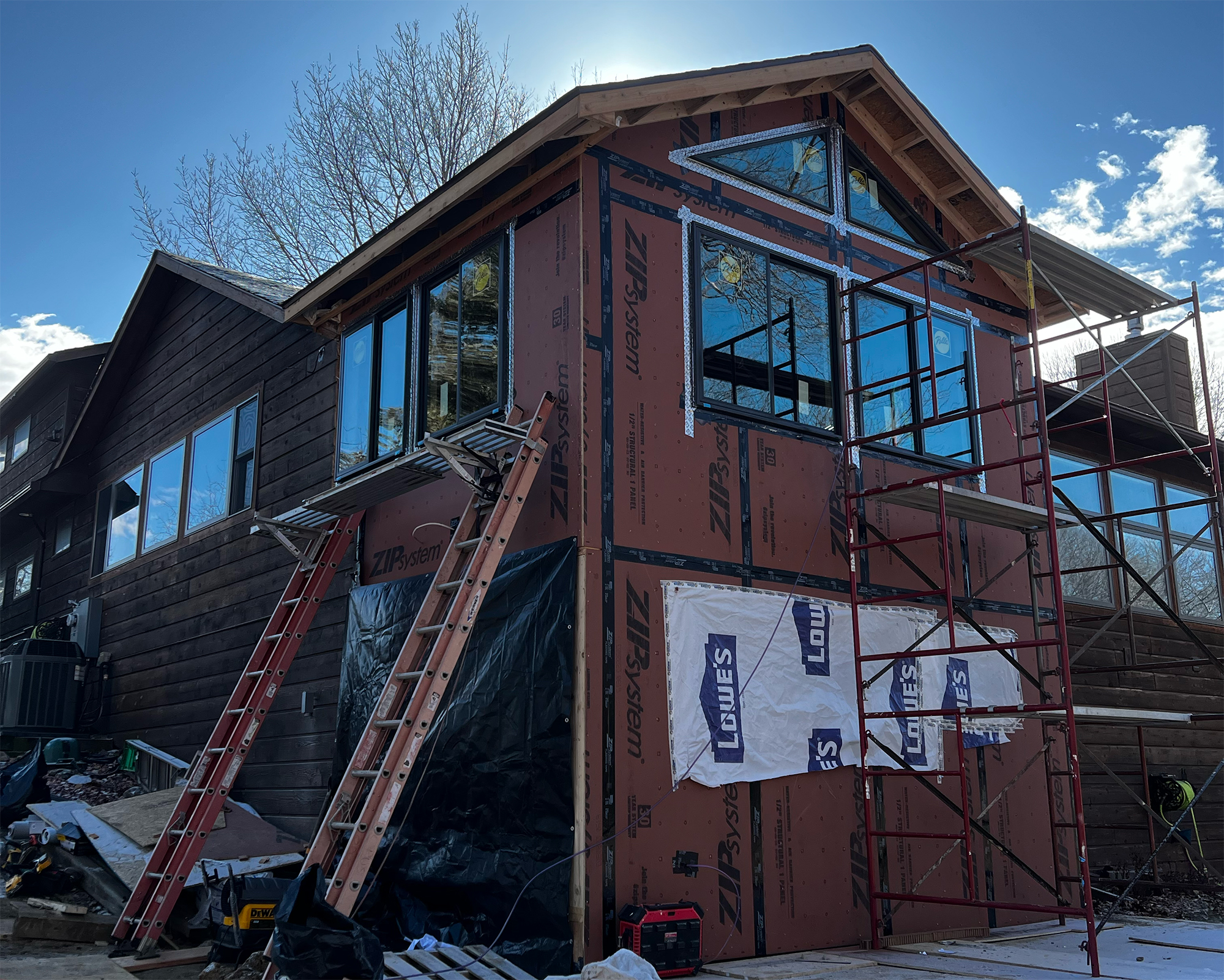
The building envelope is everything that separates the inside of your house from the outside: walls, roof, foundation, windows, doors. Sealing it properly is one of the most important things a builder can do for energy efficiency and comfort.
Think of it like wrapping your house in a puffy sweater. If there are gaps in the sweater, cold air gets in during winter and hot, humid air gets in during summer. A well-sealed envelope keeps your home comfortable year-round and reduces your heating and cooling costs.
Ask your builder how they plan to achieve airtight construction. Do they use house wrap? Do they seal penetrations around windows and doors? Do they test for air leaks after construction?
What materials are you using, and why?
Quality materials cost more upfront, but they last longer and perform better. Insulated concrete forms (ICF), for example, can reduce energy use by up to 60% compared to traditional stick framing. They also hold up better in Iowa's freeze-thaw cycles.
Ask your builder to explain their material choices. You want someone who can walk you through the tradeoffs between cost, performance, and longevity.
How do you handle waste on your job sites?
A builder who tracks and reuses materials is a builder who's paying attention to the details. Ask how they minimize waste. Do they have a system for cataloging offcuts? Do they recycle jobsite materials? Do they order precisely to avoid excess?
The answers will tell you a lot about how they run their projects.
How Tyler builds at Timberbrook
Before any project starts, the most useful conversation isn't about square footage. It's about how you actually use the space. Your routines, your family, what's been frustrating about the current setup. The building part comes after that.
For Iowa specifically: seal the envelope, choose materials for the climate, and plan cuts before you order. These aren't dramatic changes. They're decisions made at the start of a project that you stop noticing after year one because everything just works.
If you're planning a project in central Iowa and want to understand what sustainable building actually costs and saves over time, request a quote. Tyler will give you the honest numbers.